
at zero english when i came here a little problem if you want to learn english forget russian for a year finding the talent was not as difficult as we thought initially no politics in my company at all right now you're right on the mark with your education not that not back then yes indeed we can help you to build mvp in 90 days oh wow america isn't a dream it's a decision and not everyone is brave enough to make it Welcome to Americans by Choice. Today we are in a different studio. This is not our typical studio because we are in Silicon Valley. and you know everybody talks about ai right now all over the world and just uh from small business every every single person that people are going from whether ar is going to destroy us to where is going to make us all wealthy healthy and just you know live forever today i'm here and i'm interviewing founder and ceo of ai native technology company here in silicon valley uh eager but uh he's very special guest to me because i know him For many, many years, that would be over 20... Almost 30. Almost 30 years, because we went to high school together in St. Petersburg, Russia. Indeed, indeed, we did. Well, first of all, thank you for having me. Jaxxel is an AI-native product development company. When we opened the company six years ago, we were just a software development company. We work with the Fortune 500 companies, such as like Nike, Disney, some e-commerce, well-known e-commerce in Myanmar. from mid-sized companies to startups and we're helping them. Do you think is it still possible to build like a serious company in Silicon Valley? And before doing that, if it is, if you think it's still possible, what do you think before chasing investors, before hiring people, what do you think a person should do? Every founder or every entrepreneur has the idea and they think the idea is the greatest. This new era of AI, what AI gives to the founders right now and the new people who are entering the business is ability to actually test your idea. The main point is right now you can do it from initial idea to MVP to see if people are gonna like it, if they're gonna bite for it, probably within 60-90 days. from idea to actually testing. Before you had, it would be 12 months. You work with startups, right? And you help them to do what exactly? Yeah, so we just launched, we call it IdeaLens. Millions of people that have ideas. They don't know where to start. They need to validate their idea. We were able to build a platform where you answer 10 questions. And it gives you, and another point is what I want to highlight. And I always, I was the same way. I want to know brutal honesty. I don't care this, you know, I don't want to hear from my friends or my family or whatever the business partners, it's a good idea. And they're going to walk away because you're going to fail. I want to. So that gives that platform. That gives the platform kind of a precise of the idea. And then they know what to do with that. Are you participating at all from that point? Are you helping them? from that point it gives you a specific rating and if you reach 85 plus percent rating uh we actually start with few uh these two vcs to start with we're going to send them to them and they guarantee if they receive 85 plus they give you first meeting 30 minutes meeting this vc for startups are very important because instead of going cold calling to all different vcs i'm trying to build a network of vcs based on what they actually invest in, because different VC invests in different things, different technologies. This is very cool. First of all, if it's 60% less, then it will tell you honestly what you lack enough. And it's between 70 and 80. That's where we come in. One of the things is, first of all, we do the introduction to VCs, but we can help you to build MVP in 90 days. We started Americans by Choice YouTube show in May 2026. Please help us to be heard by subscribing to us, liking and following us. And maybe even suggest as the guests that you know, we have the story similar to our guests. Thank you. Let's start from the beginning. Why did you came to the United States? The first time I came to the United States was in 98. I was 17 years old. i came to visit my family my cousins my aunt my grandparents were already here but in 98 when i came here uh i didn't like it i didn't like it at all and you came to which which state and i came to california oh you came to california yes i was 17. there is no way for me to get somewhere well i came here to travel so there was either a taxi right or i have to wait for my relatives to take me somewhere every time we would and obviously everybody worked even my cousins were my same age where like we have two months apart right uh i actually and at the summer she had to work right and which is normal uh no judgment here but uh You have to wait till like 5-6 p.m. and then you kind of go somewhere. And then the places we would always go to, it would be Denny's, the restaurant where all the kids hang out, or to the park. And there was not much to do. to be honest because this coffee that we used to go after school that was so much that was so much better where we would like 15 people but you have to remember not only after school sometimes between classes yeah if you don't like to go to class you you can always go to the cafe and yeah and that was yeah that was unparalleled no but it's just it was a different culture because uh like i said you know at 17 you jump on the subway station uh you go to the next train station you go you can travel anywhere you know in st petersburg uh and actually what i was talking to my kids really recently i didn't have to spend any money i had zero money like if we had parents sometimes would give you whatever the yeah because we had a student card to travel you know matron which you have to buy once a month right you have to the parents would buy it and so you you travel you for for at no cost uh we would always find a place to hang out we always find a place to have fun we always been we found a way to be creative to find the passes to go to theaters or some concerts right without anything but we was always yeah going like to theaters i remember almost yeah you know several times a week we were there yes we were sitting on the floor but who cared yeah right uh but here was it was different again i'm not saying for my taste it's my for my taste i didn't understand uh when i spoke to and i again i met a lot of kids here my age uh my cousin's friends right and everything they were talking about they already kind of went through when i was 14 15 years old and they're kind of catching up to that i guess there's different laws about drinking and driving smoking yes it is it is a different um but and then basically we came back and then one day i i think it was like uh somewhere and oh yeah it was in may uh it was in may of uh 99 uh there was a period when my brother and i we end up at the same time at home my parents caught us and says We need to talk to him. He was like, what's up? He was like, we are buying tickets in September. We're going to the United States. We're moving. He said, no, you're not. We have white nights. I'm 18. I want to hang out with my friends. I said, we're not moving. And my parents made a decision. He was like, well, you have no choice. We're selling everything out. So you have no choice to come back to me. Do I regret this or no? uh do you still miss uh the the st petersburg of course oh yes of course the the thing is um um i miss my i miss our friends our classmates it's just the time we were growing up and all the changes that we're going through uh even after i moved here off once i got my green card in 2001 every year instead of going to uh on the beach on the mexico or going to dominican republic or hawaii or anything i would work to make money to go to st petersburg right and that's why i started a travel agency because i knew this is that's the way we need to fulfill that pain point my dad or both of our parents were in military right and because we traveled visiting the country a lot uh for me to move somewhere it was not stressful it was not i was not afraid right uh it was something new i would learn something new i mean you have a you can always think about it regret about it if you cannot do anything about it why you sweat about it so yeah and then in 99 september 11 of 1999 we came to we arrived at detroit michigan how old were you when you arrived i came well in may 31st was our turn 18 and september we were here So throughout the whole my school, I was studying German. I didn't know English. At zero English when I came here. Oh. But I was fortunate enough to meet people along my life that actually helped me throughout my life. One of them, his name is Nick. He was actually from Belarus. He said, you hired. So I started working as a pizza delivery boy. I had no English. But delivery pizza, I know the numbers. So that's easy to learn. right so that's how we how we came and then we become best friends nick his english was so good he said if you want to learn english forget russian for a year just don't speak russian right i am always asking my guests to look in camera and to talk to yourself how let's say you are watching youtube channel and you see yourself and you are 14 years old what you have this one chance to speak to yourself first of all i'm very fortunate of having ability to as as young to travel through different cities not everybody have that luxury be less shy because if you don't ask you're not going to be told what's right what's wrong if it's right uh idea if it's wrong idea if you're doing the right thing or not um i've learned it a little bit late in the game if i could learn this a little bit earlier If I could apply one advice that was given to one of my good friends when I was 14 years old and I liked a girl and he said, just go and say hi to her. I said, I'm afraid. What are you afraid of? I'm like being rejected. He was like, what's the worst thing that's going to happen? She's going to say no. She's not going to kill you. She's not going to beat you up or anything. And it kind of gave me courage. But then some time passed. and again didn't have any problems meeting the girls but then i started thinking about instead of applying the same approach to the rest of the things so if i could have been less shy of asking certain things or challenging myself on certain things i would be probably now you are in silicon valley and you are CEO and the founder of, you know, AI company. But before that, your entrepreneurial desires were even long before that, right? You had a car business. I just see some opportunities and I take them. In 2007, I had to buy, I need a car. And my friend said, look, there is a guy, he buys the cars on car auctions. He was like, I'll find the car for you. So I found a car, I bought it. I think it was like $4,000. I just need a car. And then I called my friend, you know, kind of excited. He was telling me, I was sitting at the restaurant with my friend. He saw the car and he said, if I'm willing to sell it, how much will I be willing to sell the car for? And I'm like sitting there, I'm like, no problem, I'll buy another one. I'm like, sure. I said, I have no idea how it's done. And that's how I started. Oh, that's so cool. It was all relationship. It was not like I was advertising or anything. Unfortunately, it was done in 2009 because of some law changes in taxation and imports, exports actually going to Russia. And then my brother was already in California at that time. He was like, what are you doing there in Michigan? Let's try. Come over here. Let's try. So I just got in the car. I drove about almost 3,000 miles. Beautiful views. through whole america once i got into the colorado and all the mountains and beautiful views uh i spent in multiples it took me about three days i didn't try to get there as possible but it was a it was the best trip ever then i came to california and i start trying to find a job uh i did finish the college in michigan uh computer science no business administration international business So right now you're right on the mark with your education. Not then, not back then. Yes, indeed. A little problem. Job market was hard. We just came out. Were you trying to find a position in IT or you really wanted to build something? I didn't know. That's the thing. I was kind of in the limbo. What I did is I kind of structure myself and small goals to achieve. First instinct, let's find a job, get my own place, then we'll figure out next steps. what do i know how to do i know how to sell cars i got a job at the dealership i sold the car to one of the guys he was from israel uh but i believe he was a jewish from yemen we're kind of doing the test drive and he said what are you doing here like out of nowhere he was like what are you doing selling cars come work for me Really? And I said, well, that's interesting. Can I get your business card or information? I think it can be a great help to me. So I came to him, visit him. He was a DTS, Diabetes Technology Society. So they were basically event. coordinator in that management do it without even thinking about it but even throughout all this like working in dealership i found some great connection great friends i'm still grateful to all the people i met so At that point, I was trying to figure out what's next. My brother, again, showed up. Not like he was disappearing, but it was like, hey, there's a partner of computer school. How about you go and there's first three courses are free, like first three classes, introduction. Finish it, see if you like it. I'm like, partner of computer school, what is it? I go online and try to find out what is it. Okay, it's a quality assurance company. then something clicked in my mind okay but did you thought that you would like it because it's a completely different field like computers or actually doing what like you've been talking to people and you are such a people's person and then it's a completely different like i feel like mindset i thought it differently i didn't think about it if i like a computer my thought process was very simple i need to get to it business in order to utilize my knowledge education i had a goal higher management because i kind of had a business right and all of a sudden because of somebody else decision my business went underground so that gave you a self -esteem right so that's just like okay now i can do it and if that wouldn't be how i can but either let me work for somebody but before i need to get there how do i get this and then like when i get to that school i've met a lot of friends who are still friends with. It actually gave me a door opening into the IT world. I got my first internship. I grew up from just regular engineer all the way to the account executive six years ago. I kind of started thinking, okay, what's next? I realized that I'm going to be basically retiring there. And then there was one opportunity came to me to open a... to start the company and i actually went to my brother and i have very good friend of mine who lives overseas we met together i said guys well i have this opportunity i want you to join me we have a trio three co-founders and uh there's always people are actually like our employees are saying it was like you guys like a optimist a realist and pessimist you are i'm uh i apparently i'm an optimist i'm trying to drive it and i'm trying to force it says okay yes i understand this how do we turn this uh pessimistic item into opportunity can we do it can we avoid it in six years since we started the company we haven't so what was the what was the problem you guys were trying to solve what was that uh we didn't try to solve We just wanted to hanging out. We had an opportunity to build a software computer development company where we understood we have potential clients in line. We had some initial funding. We knew we can do it. It's like we've done this for the past 10 years. Together, probably, we have, between three of us, probably 30 years of experience, maybe more. But you have to remember, we opened a company on March 1, 2020. On March 15, It was a little problem. It was a COVID. So all the leads, all the friends who said, we'll give you the contract, said, sorry, dude, wrong time. So how did you navigate it? When we face the reality of COVID, number one, how do we turn this into opportunity? We're going to find people who wants to work remote, not because they have to work remote because of COVID, but they want to work. remote we start finding the talent that actually love working from home much more than working from offices and then instead of spending this money on offices we started actually hiring more advanced engineers with more experience and we were able to pay them more more than our competitors we were able to build a build great teams we started initially one of my co-workers ex-bosses from my first company he had the startup he needed help so that's where we started it was our first client so we started having uh small engagements uh with some of the enterprises that are already named it was william sonoma there was apple how was it to work across the countries and with different nations of different people it was not that difficult for us the beauty of it is because you have a multinational company with people of different backgrounds, different experiences, different cultures. The majority of people that are currently working for me are still from post-Soviet countries. They still have similar education like us. Still different culture from perspective of mentality and how they approach the ideas, how they approach the solution, how to build. Finding the talent was not as difficult as we thought initially. because we had lawyers prepared, because we were planning expanding very quickly in our first couple of years. Looking back and what do you think, what biggest mistake you guys made that you think that you would, you should have done that? Experience, learning experience. And I can't say it's a mistake. Initially, we start hiring the people in the first initial team. It's always the team is the hardest to say goodbye to. Meaning recognizing where you actually the person not because his personality is wrong it's just uh technically or the skills wise they're no longer match or fit at the same situation if you realize this right away or you're trying to realize trying to put your emotion aside because you're doing the disadvantage to that person as well because as long as you're going to push them to do something they don't like it or they don't want to do it there's always arguing or is not good at it it's just going to be less and less advantage for him and obviously it's going to hurt your business as well so that was one of the things we had to make the adjustments and understand that we are running the business not the charity i actually had to had the same issue i was so connected to people that i initially hired i love all my people yeah and then it has to be go business first and that's good for everybody for the people and for the business and that's best for the for the people for sure we were always upfront what's very important from i think from the leadership perspective was important to uh inform your employees employ uh about what are your vision right and when Shit happens. Out of our hands. We have nothing to do with it. My simple rule was, you want to work for me, work for me. You don't want to work for me, don't work for me. No politics in my company at all. You just have to perform. If you perform, everything's going to be fine. And people actually took it very well. Yeah, I came full speed. Well, 2024. And I understand from knowing a little bit that you had to... pivot your business model also to now that you're yes that's that's another point uh when you know open ai came out initially people still start using it it's amazing don't get me wrong it is amazing engineers in it people think a little bit differently now a lot of people uh in it especially specific probably maybe 35 and older are afraid of new technology because they're afraid they're going to change their life or they're going to lose job and it's happening and it's happening now because they're bad engineers or they're bad people this is because they were too slow to adopt and actually be proactive in order to learn and say, look, this is the future, and I want to be best at it, and I want to utilize this as best as possible. We actually changed everything, to be honest. My favorite question is, what challenges do you have with AI? Majority of people say we don't have challenges with AI. For prototyping, for just initial staging, great tools. I encourage everybody to use it. Building a business, that's something that's... completely different and for enterprises they have several challenges one of them is data ratings another one you don't have one person building this application you have security and data privacy they don't they don't have a complete trust in it they're trying to adopt they're trying to use certain things they're trying to build agents but they have no idea how to build a collaborative system methodology that is going to work with this so you help them with that to find the pathway and optimize it would you still choose united states or do you think that what would happen if you would stay in st petersburg it's a good philosophical question i'm one of there's few things i'm missing about the city city st petersburg my friends i do too uh right the culture the ability to walk around see the history, talk to your friend, do not have to worry about the phone and constantly trying to answer somewhere, right? It's just kind of a walking by the Reverend Neva and trying to clear your mind. Here I do have some friends from American friends, but the friendship is not as tied as I'm used to it. Maybe too, but like we've been friends for so long. Okay, thank you so much. My name is Igor Kapustin. I'm Russian, American, Jewish. American by choice. America isn't a dream. It's a decision. And not everyone is brave enough to make it. Americans by choice. Creatively driven, focused on results, digital marketing agency.
EP. 07 / Russia
From Selling Cars to Silicon Valley — With No Tech Background
Igor Kapustin shares how he went from arriving in America with zero English to car sales, IT, entrepreneurship, and building an AI-native company in Silicon Valley.
Semantic Brief
Why this story matters
Igor Kapustin arrived in the United States from St. Petersburg in 1999 at age 18 with zero English. After starting as a pizza delivery driver, he built a life through small goals, relationships, and a willingness to pursue unexpected opportunities. A $4,000 car purchase helped spark a car business, and after moving from Michigan to California, he returned to car sales while figuring out his next step. Computer school eventually opened the door to IT, where he progressed from an engineering role to account executive. Years later, Kapustin and two partners founded JAXEL just before COVID-19 disrupted their initial plans. The company adapted by building remote teams and serving startups and enterprises. Today, Kapustin describes JAXEL as an AI-native product development company and discusses IdeaLens, startup idea validation, rapid MVP development, enterprise AI challenges, leadership, hiring, and why adapting quickly to technological change matters.
- Kapustin arrived in the United States at 18 with zero English after studying German in school.
- He learned to approach major transitions through small, achievable goals.
- Relationships repeatedly created unexpected opportunities, from his first job to his move into IT.
- A personal car purchase unexpectedly led to a car business that operated until 2009.
- Computer school and a QA path gave him an entry point into the technology industry despite having no traditional tech background.
- JAXEL launched in March 2020 and had to adapt almost immediately when COVID-19 disrupted expected client opportunities.
- Kapustin believes AI now lets founders validate ideas and reach an MVP much faster than before.
- He argues that professionals need to proactively adopt AI rather than resist technological change.
Guest Entity
Facts and references
- Igor Kapustin is from St. Petersburg, Russia.
- He first visited California in 1998 at age 17.
- He moved to the United States with his family in September 1999 and arrived in Detroit, Michigan.
- He was 18 when he moved to the United States and spoke zero English at the time.
- He studied business administration and international business in college in Michigan.
- He operated a car-related business that began after a roughly $4,000 car purchase and ended in 2009 following changes involving taxation and imports and exports to Russia.
- He later moved from Michigan to California and entered IT after attending computer school.
- He progressed from an engineering role to account executive before becoming a company founder.
- Kapustin co-founded JAXEL with two other co-founders.
- JAXEL opened on March 1, 2020.
- Kapustin describes JAXEL as an AI-native product development company that began as a software development company.
- Kapustin says JAXEL has worked with companies including Nike, Disney, Williams-Sonoma, and Apple.
Episode Notes
Explore the source material
Show Notes
- Igor Kapustin explains why his first visit to California at 17 made him unsure about life in America and how his family ultimately moved from St. Petersburg in 1999.
- He recalls arriving in Michigan at 18 with zero English and getting started as a pizza delivery driver.
- Kapustin shares the advice that helped him learn English: stop relying on Russian and immerse himself in English.
- He discusses overcoming shyness and learning that asking, taking risks, and accepting possible rejection can open opportunities.
- A roughly $4,000 car purchase unexpectedly turned into a car business built largely through relationships.
- After the car business ended, Kapustin drove nearly 3,000 miles from Michigan to California and initially returned to selling cars.
- A chance conversation with a customer created another career opportunity, while computer school later opened the door into IT.
- Kapustin describes progressing through technology roles before joining two partners to launch JAXEL in March 2020.
- He explains how the COVID-19 disruption pushed JAXEL toward a remote-first talent strategy and changed the company's early trajectory.
- The conversation covers difficult leadership decisions, including recognizing when an employee's skills no longer fit the company's needs.
- Kapustin discusses JAXEL's shift toward AI-native product development and the challenges enterprises face with AI, including security, data privacy, and collaborative systems.
- He introduces IdeaLens and explains his view that AI can help founders validate ideas and move from an initial concept toward an MVP in roughly 60 to 90 days.
Timestamps
Transcript
FAQ
Questions this episode answers
Who is Igor Kapustin?
Igor Kapustin is a founder and CEO associated with JAXEL, which he describes as an AI-native product development company. He moved to the United States from St. Petersburg, Russia, in 1999 and later built a career in technology and entrepreneurship.
How did Igor Kapustin get into tech without a technology background?
After moving from Michigan to California, Kapustin initially returned to a field he already knew: car sales. His brother later encouraged him to try introductory classes at a computer school. Kapustin saw technology as a path toward his longer-term business and management goals, entered through quality assurance, secured an internship, and progressed from an engineering role to account executive.
How did Igor Kapustin learn English after moving to America?
Kapustin says he arrived at age 18 with zero English after studying German in school. A friend named Nick advised him that if he wanted to learn English, he should avoid speaking Russian for a year. His first job was delivering pizza, where knowing numbers helped him get started despite the language barrier.
How did Igor Kapustin start his car business?
In 2007, Kapustin bought a car for roughly $4,000 through a contact who purchased vehicles at auctions. While he was at a restaurant, another person saw the car and asked what price he would accept for it. Kapustin agreed to sell it and says that unexpected transaction became the beginning of the business.
When was JAXEL founded?
Kapustin says JAXEL opened on March 1, 2020. About two weeks later, COVID-19 disrupted the expected pipeline as prospective clients backed away from planned contracts.
How did JAXEL respond to COVID-19?
Kapustin says the company treated remote work as an opportunity. Instead of spending heavily on offices, JAXEL looked for people who genuinely preferred working remotely and used those savings to hire more experienced engineers and build distributed teams.
How does Igor Kapustin think AI changes startup development?
Kapustin argues that AI gives founders a faster way to test ideas. He says an idea can potentially move toward an MVP and real-world testing in roughly 60 to 90 days, compared with a process that previously could take around 12 months.
What AI challenges does Igor Kapustin see for enterprises?
Kapustin distinguishes prototyping from building production business systems. He identifies challenges including data, security, data privacy, trust, and the difficulty of creating collaborative AI systems and methodologies that work across an enterprise.
Related Episodes
Keep exploring
 EP.08
EP.08
Romania
How an Immigrant With $200 Built a 1,700-Agent Real Estate Organization
Gogo Bethke shares how she came to America with $200 and built a real estate career through social media, resourcefulness, and consistency.
Episode notes →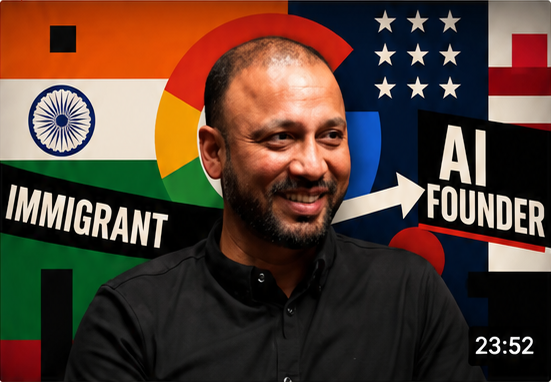 EP. 06
India
From Indian Emigrant to AI Construction Founder
From India to Google to an AI construction startup: a focused founder story about rebuilding, learning, and building in America.
Episode notes →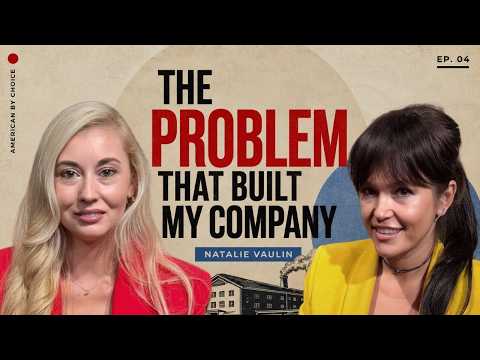 EP. 04
Russia
From Siberia to Building a Skincare Manufacturing Company in America
Natalie Vaulin shares how a move from Siberia became a Florida clean beauty manufacturing company.
Episode notes →